

Artificial Intelligence Revolutionizes Anti-Infective Drug Discovery: From Target Identification to Lead Optimization
- 16 October 2025
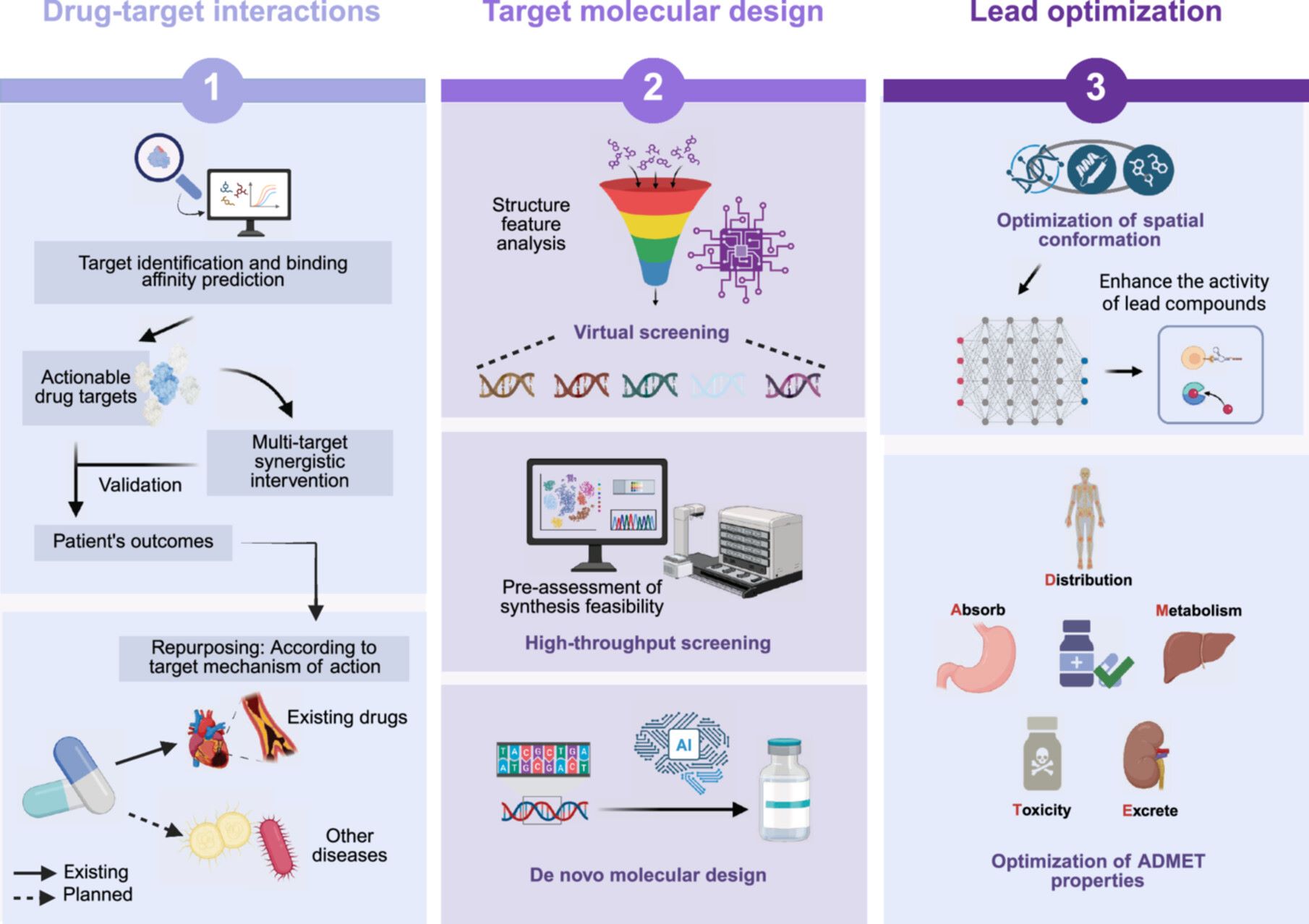
Artificial intelligence (AI) technology is revolutionizing antimicrobial drug development. In response to increasingly severe antimicrobial resistance challenges, AI can efficiently predict pathogen evolutionary trends, identify potential drug targets, and accelerate compound design and optimization, thereby significantly shortening the development timeline for antimicrobial agents. This correspondence focuses on the applications of AI in phenotype-driven target identification and validation, rational molecular design, and lead compound optimization for antimicrobial drug development, while highlighting current limitations and providing perspectives on future directions.
An Interpretable Machine Learning Model for Predicting 5-Year Survival in Breast Cancer Based on Integration of Proteomics and Clinical Data
- 07 October 2025
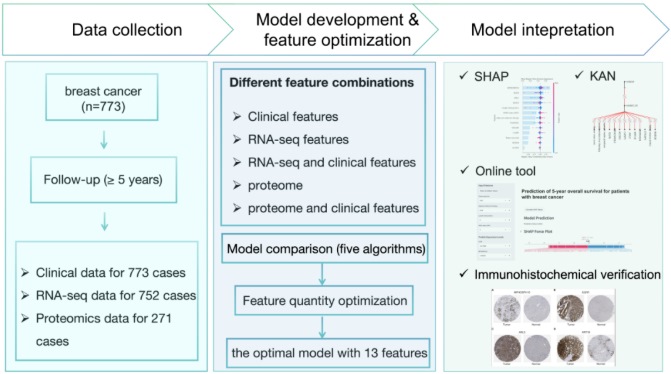
Breast cancer is a highly heterogeneous malignancy among women worldwide. Traditional prognostic models relying solely on clinicopathological features offer limited predictive accuracy and lack molecular-level insights. Unlike such conventional approaches, this study integrates proteomic and clinical data within an interpretable deep learning framework to improve prognostic precision and biological interpretability. We aimed to develop a more reliable model to accurately predict the 5-year survival status of patients with breast cancer using multi-omics data. The model integrating proteomics and clinical features demonstrated superior performance (AUC = 0.8136) compared to other feature combination models. The optimized model with 13 key features (4 clinical features and 9 proteins) achieved an AUC of 0.864 with the precision of 0.970, the recall of 0.810, and F1-score of 0.883. SHapley Additive exPlanations analysis identified MPHOSPH10, EGFR, ARL3, KRT18, lymph node status, and HER2 status as the most influential features, while Kolmogorov–Arnold Network analysis provided explicit mathematical relationships between key contributors and prediction outcomes. Collectively, our interpretable multi-modal model demonstrates robust performance in predicting 5-year survival in breast cancer patients and offers mechanistic insights, thereby enhancing its potential for clinical translation through the development of an accessible prediction tool.
Immunometabolic Features and Key Biomarkers in Lung Cancer Complicated by Pulmonary Tuberculosis: Insights From Transcriptome and Clinical Cohort Analysis
- 26 November 2025
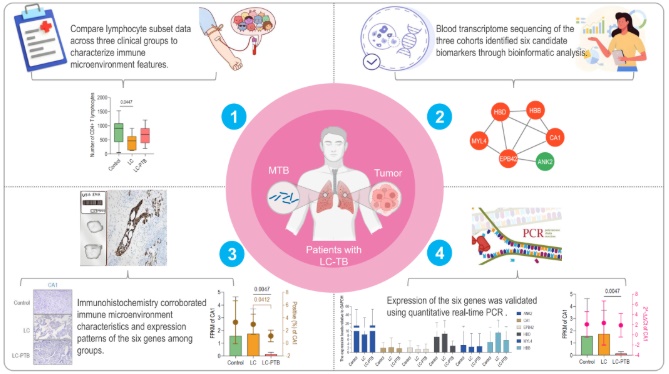
Coexisting lung cancer and pulmonary tuberculosis (LC-PTB) is clinically challenging in diagnosis and treatment, and its mechanisms are unclear. This study aimed to explore its immune and molecular basis to identify diagnostic biomarkers. We prospectively enrolled LC patients, LC-PTB patients, and controls. Lymphocyte subsets were analyzed by flow cytometry. Key markers were identified through blood transcriptome sequencing and bioinformatics (differential expression, GSEA, GO/KEGG), and validated by RT-qPCR and immunohistochemistry. Analysis included 138 subjects (50 controls, 50 LC, 38 LC-PTB). Compared to LC alone, LC-PTB demonstrated significantly increased CD4+ T cells (p = 0.0064) and NK cells (p = 0.0447), with an elevated CD4/CD8 ratio. Transcriptome analysis identified 144 upregulated and 435 downregulated genes in LC-PTB versus controls, and 216 upregulated and 388 downregulated genes versus LC alone(|Fold Change| ≥ 2,p < 0.05 ).Enrichment analysis revealed involvement of antigen presentation, oxidative phosphorylation, and nitrogen metabolism. Six key genes (ANK2, EPB42, CA1, HBB, HBD, MYL4) were identified. A four-gene model (CA1, HBD, MYL4, ANK2) discriminated LC-PTB from LC (AUC 0.940, 95% CI 0.846–1.000). We provide the first immune-transcriptomic map of LC-PTB and a validated four-gene diagnostic signature ready for external evaluation.
Adverse Event Profiles Following Human Papillomavirus Vaccination in Males
- 10 September 2025
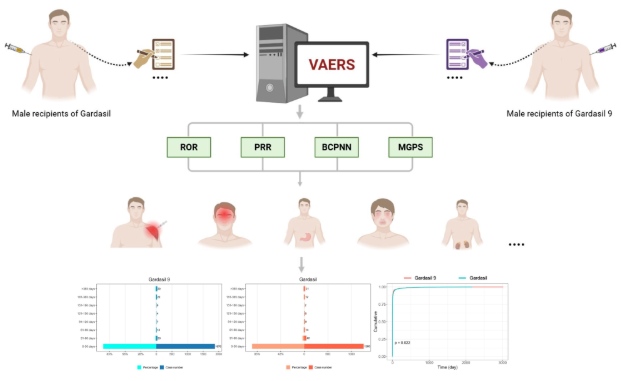
Human papillomavirus (HPV) vaccination is increasingly recognized as a cornerstone of comprehensive strategies to mitigate HPV-related disease burden globally, with expanding recommendations for male populations to enhance herd immunity and reduce transmission. However, the safety profile among male recipients of HPV vaccination remains a critical evidence gap. Adverse events following immunization (AEFIs) reported by male recipients of either Gardasil 9 or Gardasil were included from the US Vaccine Adverse Event Reporting System database. Four disproportionality algorithms were employed to identify positive signals. The temporal distribution of AEFIs was further examined to support Weibull distribution modelling and to estimate cumulative incidence patterns associated with each vaccine. Furthermore, stratified analyses should be performed by age and outcomes. Disproportionality analysis identified 35 positive signals for Gardasil 9, including 20 previously unreported, and 56 for Gardasil, of which 32 were novel. Most AEFI reports occurred within 30 days post-vaccination. The cumulative incidence of AEFIs was lower with Gardasil 9 than with Gardasil. This study presents the first systematic safety evaluation of Gardasil 9 and Gardasil in male recipients, addressing a key evidence gap. Gardasil 9 showed a potentially more favorable safety profile than Gardasil. These findings may strengthen confidence among the public and providers, inform clinical and policy decisions, and support global immunization efforts. Identified positive AEFIs warrant prospective validation to determine their clinical significance.
Wuda Granule Improves the Gastrointestinal Motility via Gut-Brain Axis in Beagle Dogs
- 14 November 2025
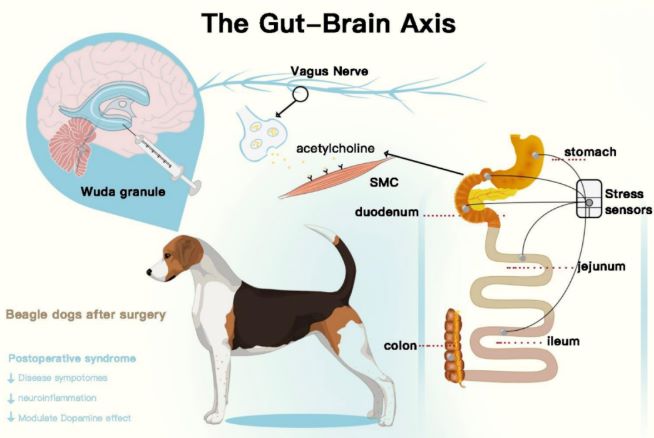
This study investigated the mechanism of Wuda granule (WDG) on gastrointestinal (GI) motility in beagle dogs. Stress sensors implanted in the stomach, duodenum, jejunum, and colon recorded contractile activity. Lateral ventricular administration of WDG (5 mg) significantly enhanced contractile motility in all recorded GI regions in awake dogs; this effect was attenuated under intravenous anesthesia. The prokinetic effect of central WDG was completely blocked by intravenous atropine infusion [50 μg/(kg·h)]. Bilateral cervical vagotomy prolonged the migrating motor complex cycle, weakened gastric phase III contractions, and abolished the WDG-induced enhancement specifically in the stomach. However, WDG still enhanced motility in the duodenum, jejunum, and colon post-vagotomy. Transmission electron microscopy confirmed no intestinal structural changes induced by WDG. WDG enhances GI contractility centrally, primarily via activation of vagal cholinergic pathways for the stomach, while exerting effects on the lower GI tract through additional, non-vagal mechanisms.
Potassium Sorbate Triggers Kidney Injury via Dysregulated Intercellular Communication: A Study Combining Network Toxicology, Machine Learning, Molecular Docking, and Single-Cell RNA Sequencing
- 23 November 2025
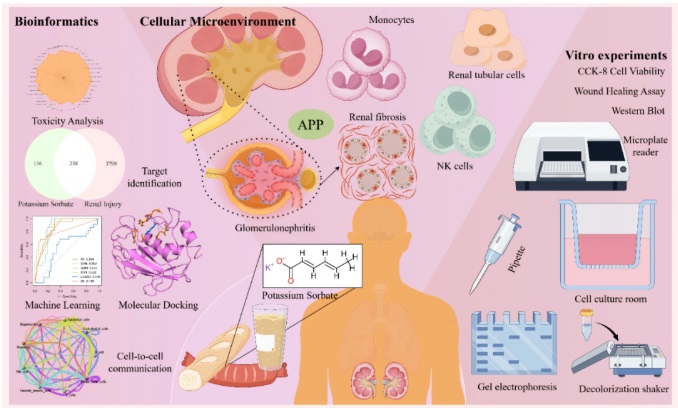
Acute kidney injury (AKI) is a clinically significant syndrome, characterized by high mortality rates and the potential for progression to chronic kidney disease. Potassium sorbate (PS), a widely-used food preservative with a high safety profile, has been identified as a potential risk factor for inducing acute kidney injury. However, the mechanism of its potential nephrotoxicity, particularly in relation to the onset of AKI, remains unclear. This study provides a comprehensive examination of the molecular mechanisms of PS-induced kidney injury, employing a variety of methodologies including network toxicology, molecular docking, molecular dynamics simulation, machine learning, and single-cell analysis. The findings suggest that PS interacts with key targets such as matrix metallopeptidase 9 (MMP9) and amyloid precursor protein (APP), affecting lipid metabolism and atherosclerosis, as well as AGE-RAGE signaling pathways. These interactions trigger oxidative stress, inflammatory responses, and metabolic disorders, thereby facilitating the development of acute kidney injury. Machine learning screening identified the APP as a key regulatory gene. Furthermore, single-cell analysis revealed that APP, via APP-CD74 and APP-PTGER2 ligand–receptor pairs, mediates interactions between endothelial cells and immune cells. This provides novel cellular evidence for understanding PS-induced kidney tubular inflammation and microenvironmental imbalance. This study not only offers systematic scientific evidence for evaluating the nephrotoxicity of PS, but also introduces an innovative research paradigm that integrates multiple dimensions for the safety assessment of food additives and the exploration of the molecular mechanisms of acute kidney injury.
A Cell-Penetrating Scorpion Venom Peptide Disrupts the HSP90β-PPARα Interaction to Ameliorate Metabolic Dysfunction-Associated Steatotic Liver Disease
- 23 December 2025
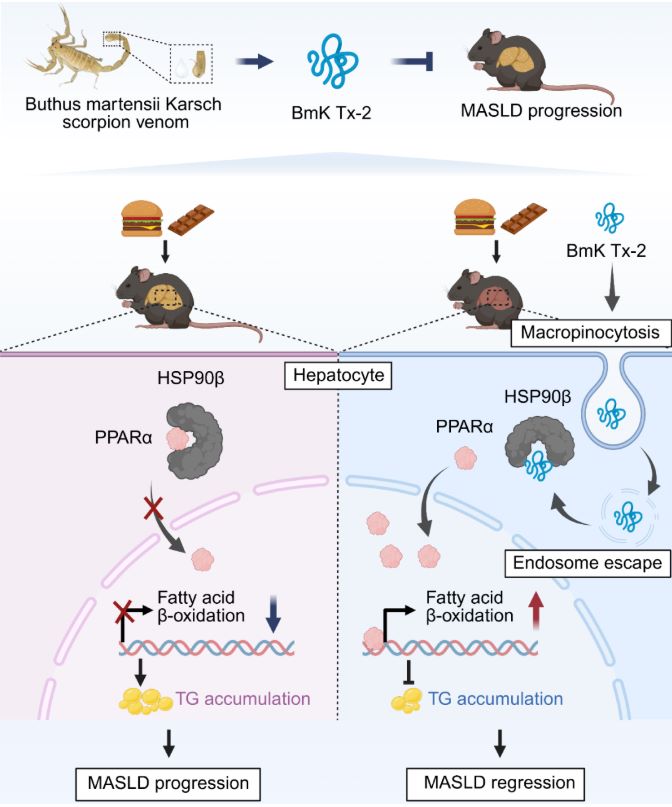
As a key regulator of hepatic lipid homeostasis and inflammation, PPARα represents an important therapeutic target for MASLD. However, clinical trials with PPARα agonists have demonstrated insufficient efficacy, notably failing to improve hepatic steatosis. Here, through a systematic screen, we identified BmK Tx-2, a peptide from Buthus martensii Karsch (BmK) scorpion venom that has unique antisteatotic activity. BmK Tx-2 effectively prevented diet-induced MASL/MASH in mice by activating fatty acid β-oxidation (FAO) in a PPARα-dependent manner, as demonstrated by the abolished therapeutic effect on PPARα knockout mice. Mechanistically, we demonstrated that HSP90β acts as a suppressor of PPARα-driven lipid metabolism in hepatocytes during MASLD progression. Liver-specific HSP90β overexpression inhibited the PPARα-mediated regulation of lipid metabolism and abolished the anti-MASH effect of BmK Tx-2. Structural analysis revealed that HSP90β interacts with PPARα through its K349, R405, K406, and D444 residues, thereby inhibiting PPARα nuclear translocation and transcriptional activity. Notably, BmK Tx-2 efficiently internalized into hepatocytes and specifically bound to HSP90β via its V55 residue. This interaction disrupted the HSP90β–PPARα complex, promoted PPARα nuclear import, and subsequently activated PPARα-mediated FAO. These findings establish the HSP90β–PPARα interaction as a promising therapeutic target for MASLD, with BmK Tx-2 serving as a potential lead compound.
Medical Data as a Key Asset in the Digital Health Era: A Framework for Challenges and Strategies
- 11 November 2025
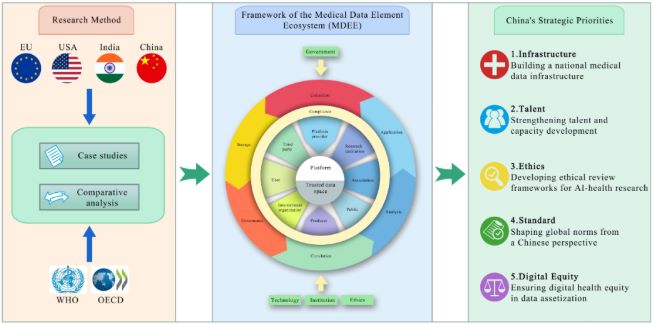
In the digital health era, medical data is key to personalized medicine and population health management, but its sharing and use face challenges—making a Medical Data Element Ecosystem (MDEE) essential to unlock its full potential. This study reviews literature to compare international frameworks with Chinese initiatives and examines cases like medical consortia and cross-border platforms. We propose the MDEE practical framework, covering micro-level stakeholder roles/responsibilities and macro-level progress in technological innovation, institutional reforms, and ethical governance. It identifies China's key priorities: construction of federated systems, talent and capacity building, ethical framework development, global standard participation, and digital equity assurance. The MDEE practical framework offers an integrated approach from operational to strategic levels. In addition, building this ecosystem needs managing three key relationships: multi-stakeholder co-creation, integration of global best practices with local innovation, and balancing data protection with innovation. By addressing these issues, China could work toward developing an MDEE that promotes data security, efficient circulation, fair value distribution, and sustainable development, potentially maximizing the value of medical data.
Dynamics and Regulation of Maternal–Fetal Interface Macrophages: From Immune Tolerance to Pregnancy Outcomes
- 05 December 2025
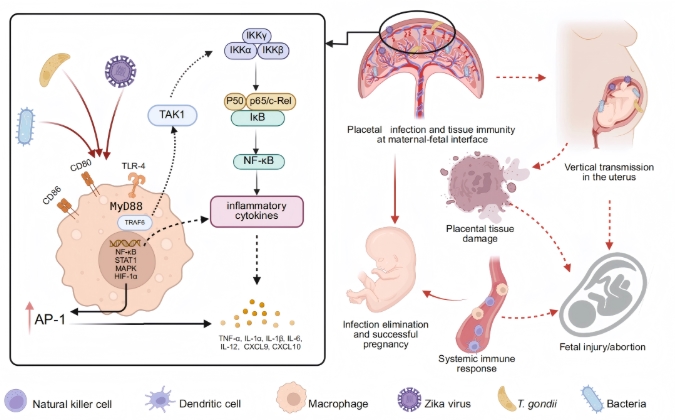
The fetal–maternal interface is a uniquely active immune niche that must continuously balance tolerance of a semi-allogeneic fetus with competent antimicrobial defense. Within this setting, macrophages are central innate sentinels whose phenotypes and functions are highly flexible, and this plasticity is increasingly viewed as a key determinant of normal gestation. During a successful pregnancy, they help maintain local immunity by promoting the resolution of inflammation, remodeling tissues, and supporting angiogenesis. By contrast, pregnancy complications—including miscarriage and preterm birth—often feature skewed macrophage polarization and loss of function, pointing to a contributory pathogenic role. Despite abundant work describing stage-specific activities, the signaling circuits that program macrophage behavior, their subset diversification, and their crosstalk with other immune cells remain incompletely mapped. This review summarizes the cellular composition and temporal shifts of the fetal–maternal immune milieu, integrates current data on macrophage localization and regulation, and outlines how their dysregulation may drive disease, to frame mechanistic hypotheses and highlight therapeutic targets.
Bronchial Fibroblasts Respond to House Dust Mite Challenge With Cytokine Secretion: Role in Allergic Airway Inflammation
- 28 November 2025
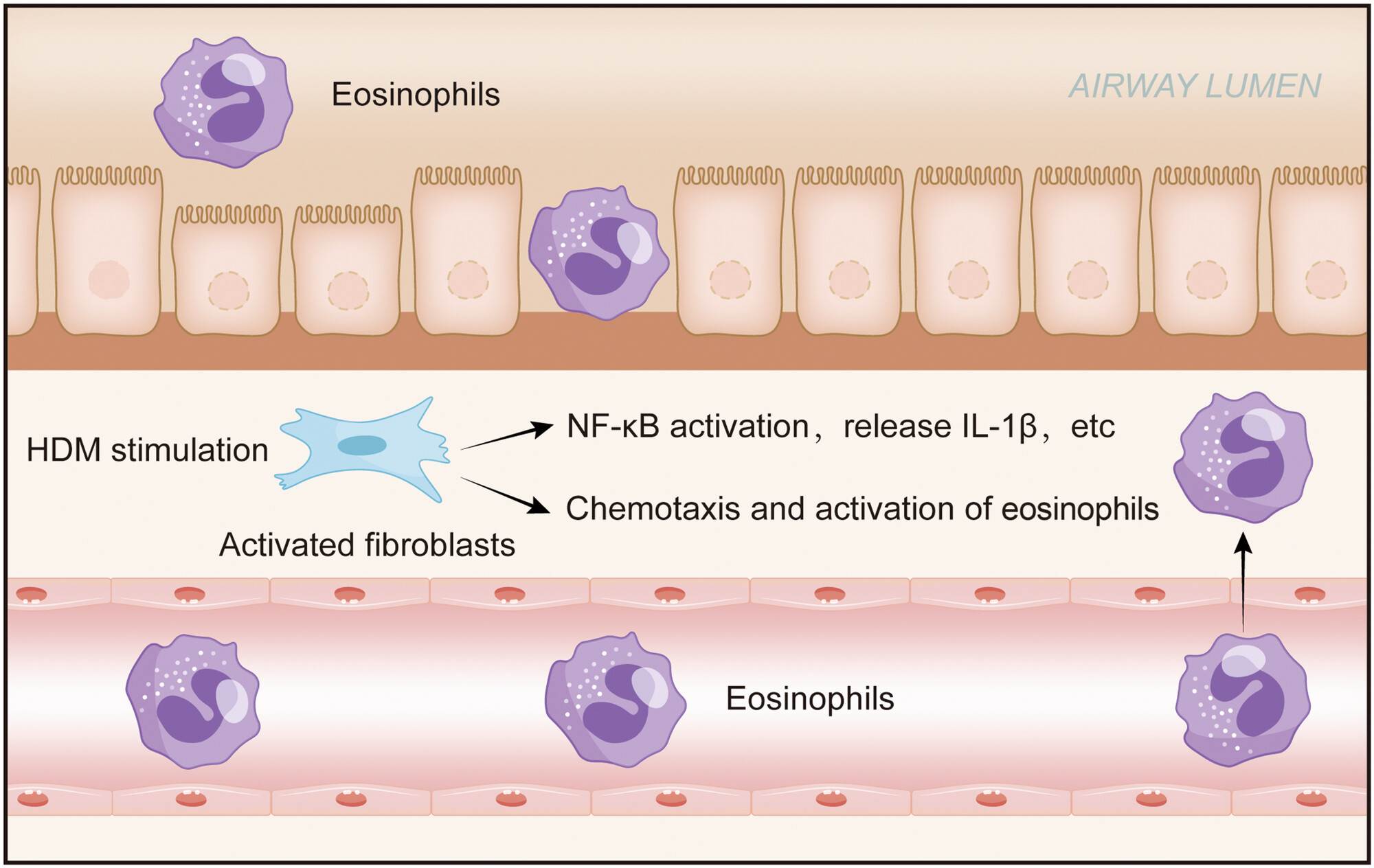
Schematic of the early-stage characteristics of house dust mites-induced bronchial fibroblasts, which are characterized by suppressed extracellular matrix production alongside activated inflammatory signaling.
Network Perturbation Analysis Identifies Three Molecular Subtypes With Distinct Clinical Outcomes and Therapeutic Vulnerabilities in Endometrial Cancer
- 15 December 2025
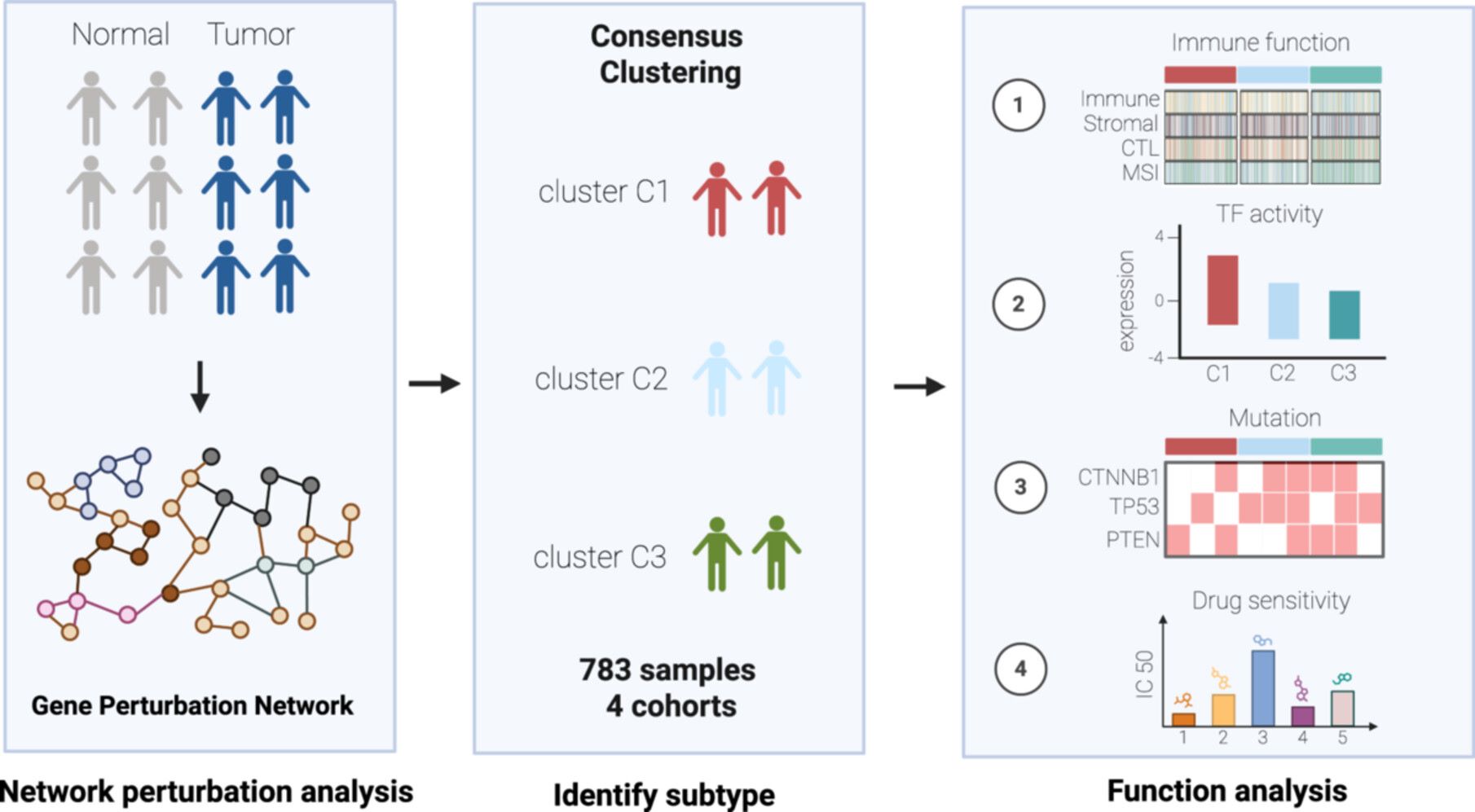
We performed network perturbation analysis on transcriptomic data from endometrial cancer patients across multiple cohorts and identified three molecular subtypes with distinct clinical outcomes. The most aggressive subtype, C1, exhibits comprehensive molecular and immunological alterations, including dysregulated hormone signaling, immune exclusion, and specific pathway activation. Multi-dimensional profiling integrating transcriptional, immunological, mutational, and pharmacological analyses revealed subtype-specific therapeutic vulnerabilities, highlighting the potential for targeted intervention in high-risk endometrial cancer patients.
Adverse Event Profiles Following Human Papillomavirus Vaccination in Males
- 10 September 2025
Human papillomavirus (HPV) vaccination is increasingly recognized as a cornerstone of comprehensive strategies to mitigate HPV-related disease burden globally, with expanding recommendations for male populations to enhance herd immunity and reduce transmission. However, the safety profile among male recipients of HPV vaccination remains a critical evidence gap. Adverse events following immunization (AEFIs) reported by male recipients of either Gardasil 9 or Gardasil were included from the US Vaccine Adverse Event Reporting System database. Four disproportionality algorithms were employed to identify positive signals. The temporal distribution of AEFIs was further examined to support Weibull distribution modelling and to estimate cumulative incidence patterns associated with each vaccine. Furthermore, stratified analyses should be performed by age and outcomes. Disproportionality analysis identified 35 positive signals for Gardasil 9, including 20 previously unreported, and 56 for Gardasil, of which 32 were novel. Most AEFI reports occurred within 30 days post-vaccination. The cumulative incidence of AEFIs was lower with Gardasil 9 than with Gardasil. This study presents the first systematic safety evaluation of Gardasil 9 and Gardasil in male recipients, addressing a key evidence gap. Gardasil 9 showed a potentially more favorable safety profile than Gardasil. These findings may strengthen confidence among the public and providers, inform clinical and policy decisions, and support global immunization efforts. Identified positive AEFIs warrant prospective validation to determine their clinical significance.