

Bizard: A Community-Driven Platform for Accelerating and Enhancing Biomedical Data Visualization
- 19 March 2026
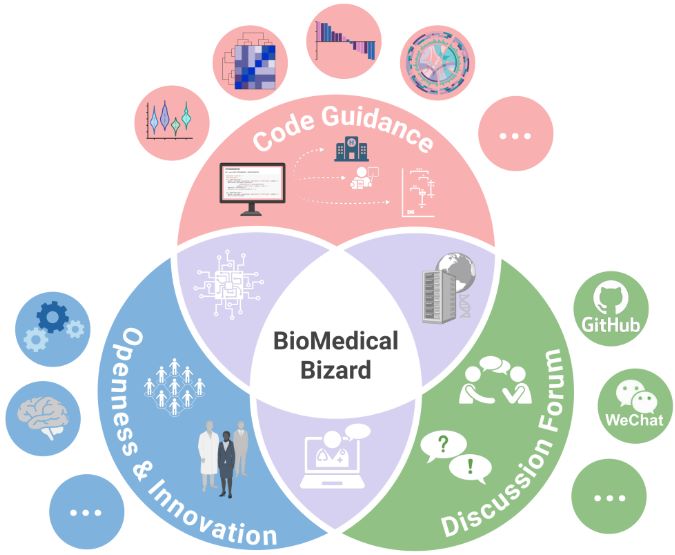
Biomedical research increasingly relies on heterogeneous, high-dimensional datasets, yet effective visualization remains hindered by fragmented code resources, steep programming barriers, and limited domain-specific guidance. Bizard is an open-source visualization code repository engineered to streamline data analysis in biomedical research. It aggregates a diverse array of executable visualization scripts, empowering researchers to select and tailor optimal graphical methods for their specific investigative demands. The platform features an intuitive interface equipped with sophisticated browsing and filtering capabilities, exhaustive tutorials, and interactive discussion forums that foster knowledge dissemination. Through its community-driven paradigm, Bizard promotes continual refinement and functional expansion, establishing itself as an essential resource for elevating biomedical data visualization and analytical standards. By harnessing Bizard's infrastructure, researchers can augment their visualization proficiency, propel methodological progress, and enhance interpretive rigor, ultimately accelerating precision medicine and personalized therapeutics. Bizard is freely accessible at https://openbiox.github.io/Bizard/.
bacNeo: A Computational Toolkit for Identifying Bacteria-Derived Neoantigens in Human Cancers
- 29 April 2026
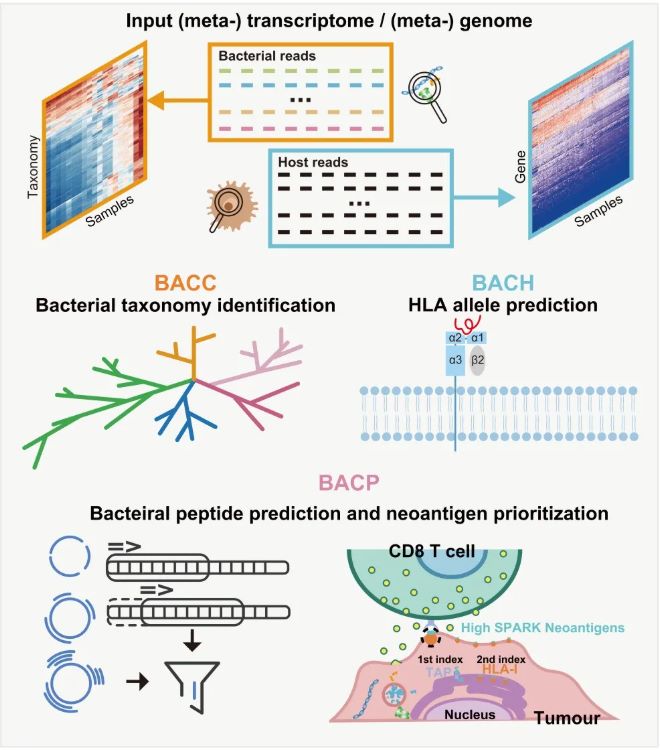
Intratumor microbiome can rewire the tumor microenvironment (TME) by presenting bacterial neoantigens, while integrated in silico tools for identifying bacterial neoantigens remain lacking. We developed bacterial neoantigen (bacNeo), a multi-omics-based computational framework that contains three modules to classify bacterial components (BACC), type bacteria-bound HLA alleles (BACH), and prioritize bacterial peptides as neoantigens (BACP) in human cancers. The input options of bacNeo are diverse: we support metagenomic or metatranscriptomic data, as well as sequencing data in different resolutions, including bulk and single-cell sequencing; aside from sequencing data, mass spectrometry (proteome) data are also recommended for peptide discovery. The neoantigen potential of these peptides is quantified by score for peptide antigenicity recognition & kinetics (SPARK). Artificial neural networks and gradient boosted decision trees enhance the predictive accuracy of bacNeo, which has been validated in bacterial peptide-HLA experimental pairs. In conclusion, bacNeo can enable personalized neoantigen discovery to accelerate therapeutic strategies across diverse cancer types.
Substrate Characterization of Mycobacterial Kinase PknG Revealing PknG-KARS-MAPK Phosphorylation Signaling Axis in Host
- 29 April 2026
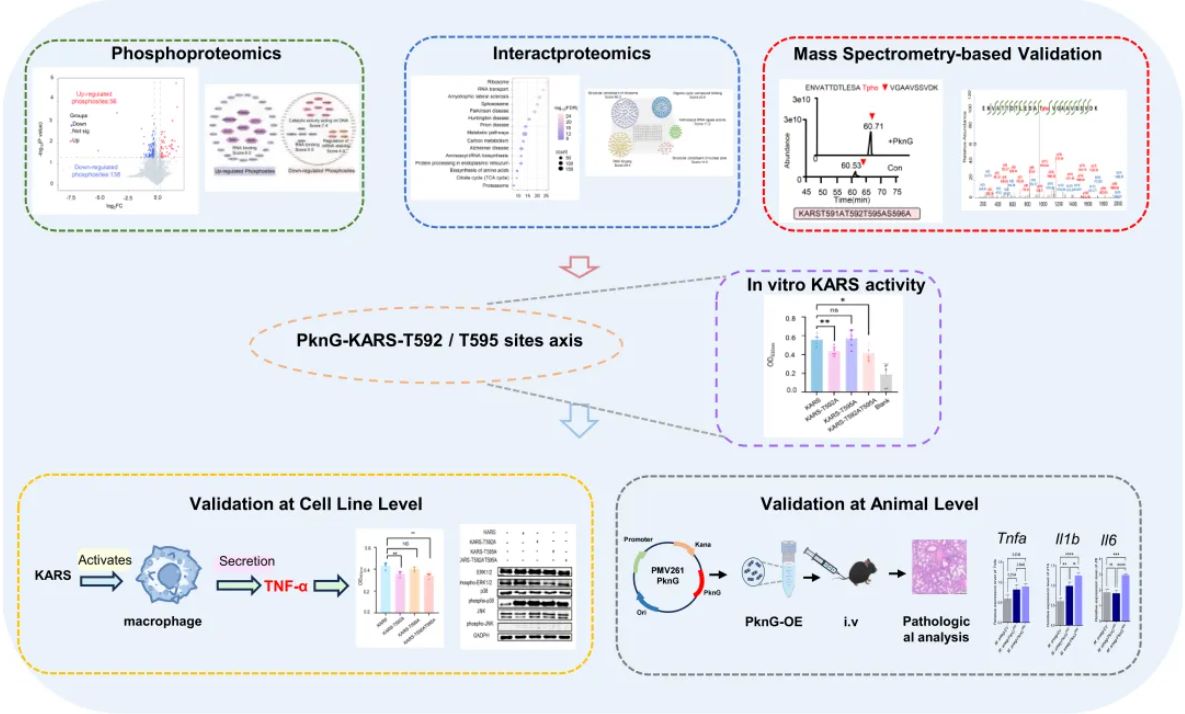
Tuberculosis is the second leading infectious disease globally, severely threatening human health. The emergence of drug-resistant Mycobacterium tuberculosis makes the development of new therapeutic targets particularly urgent. Serine/threonine protein kinase PknG can help the pathogen escape macrophage clearance by phosphorylating host proteins. This study adopted multi-omics approaches to investigate the regulatory mechanism of mycobacterial PknG on host cell processes. The results showed that host lysine-tRNA ligase (KARS) is a potential substrate of PknG; PknG, by catalyzing the phosphorylation of KARS at T592 and T595 sites, affects the phosphorylation levels in the MAPK/NF-κB signaling pathway, thereby regulating the immune response. Furthermore, PknG overexpression (MsPknG-OE) can lead to differential impacts on the lungs, characterized by elevated mRNA levels of Tnfa, Il1b, and Il6, and more severe histopathological changes. Flow cytometry showed that M. smeg-PknGMtb significantly reduced splenic CD3+ and CD8+ T cells, exhibiting an immunosuppressive trend; whereas M. smeg-PknGMs increased the proportions of MDSCs and multiple regulatory T-cell subsets while decreasing the proportion of CD8+ T cells, suggesting enhanced regulatory immunity and altered T-cell subset composition. This study systematically elucidated the mechanism by which mycobacteria regulate the host immune network through the PknG-KARS axis, and pointed out that the T592 and T595 sites of KARS could be potential targets for treating infection.
Mapping the Global Clinical Landscape of Pharmacological Therapies for Heart Failure With Preserved Ejection Fraction: An Analysis Based on ClinicalTrials.gov (2003–2025)
- 07 May 2026
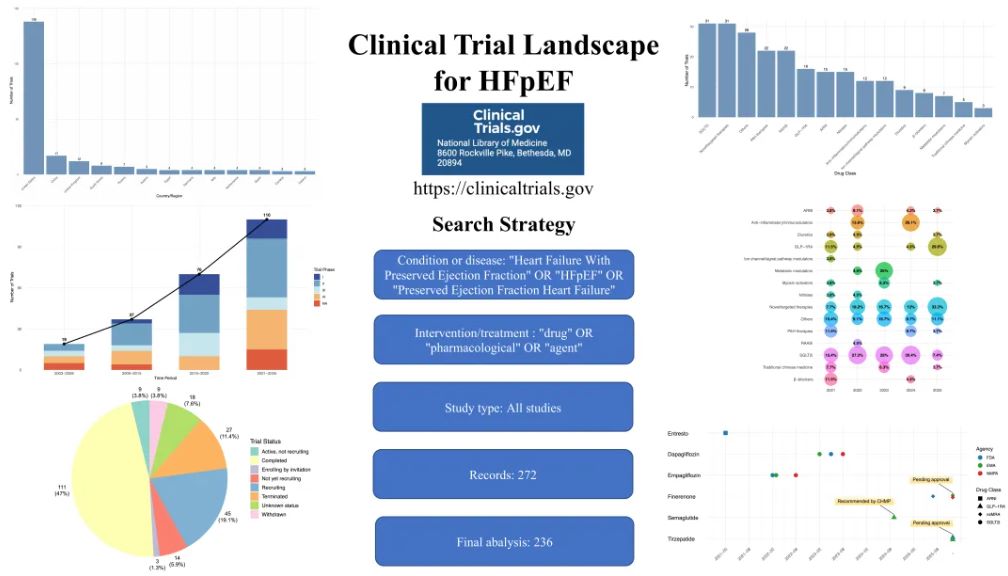
Heart failure with preserved ejection fraction (HFpEF) accounts for approximately 50% of global heart failure cases yet lacks robust pharmacological options. This analysis maps HFpEF drug trials registered on ClinicalTrials.gov from 2003 to 2025. A systematic search conducted on November 10, 2025, identified HFpEF-specific drug trials (LVEF ≥ 50%). Data regarding geography, phases, status, time, and drug classes were descriptively analyzed using R (version 4.3.1). Of the 272 trials, 236 qualified, with a notable surge post-2016 (180 [76.3%]). The majority were U.S.-led (138 [58.5%]). Phase Ⅱ trials were predominant, comprising 92 trials (39.0%), with 111 trials completed (47.0%) and 36 trials terminated (15.2%). The leading classes of drugs included SGLT2 inhibitors (SGLT2i) and novel/targeted therapies, each represented in 31 trials (13.1%). The period from 2021 to 2025 highlighted a focus on SGLT2i (30 trials, or 27.8%) and an increase in GLP-1 receptor agonists (GLP-1RA), following recent approvals (sacubitril/valsartan in 2021; empagliflozin/dapagliflozin in 2022–2023; and finerenone by the FDA in 2025). The expansion of trials post-2016 favors metabolic and targeted agents. However, attrition rates underscore the need to prioritize phenotype-specific and combination trials.
BacSafe: A Comprehensive Database for Integrated Assessment of Bacterial Biosafety
- 30 May 2026
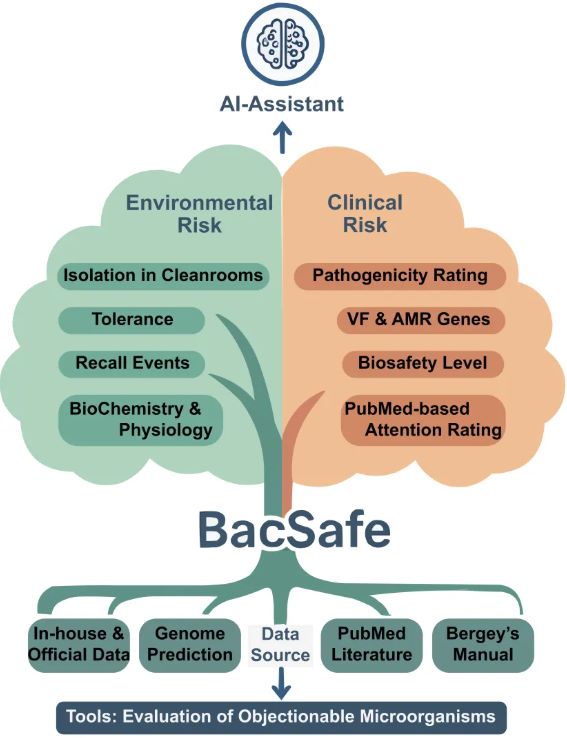
Bacterial contamination poses substantial threats to healthcare and industrial production; yet integrated resources for a comprehensive assessment of bacterial biosafety risks are currently limited. To bridge this gap, we developed BacSafe (http://bacsafe.dmicrobe.cn/), a knowledge database that profiles the biosafety risks of bacterial species based on their environmental and clinical risk traits. Environmental risk traits, such as biofilm formation and tolerance to disinfectants, and clinical risk traits, including the presence of virulence and antimicrobial resistance genes, are curated from authoritative literature and genome predictions. In addition to the theoretical characteristics, BacSafe also encompasses empirical indicators reflecting real-world risks posed by each bacterial species, including food and pharmaceuticals recall events, and document frequency in PubMed literature. Covering 20,630 species across 3902 genera, BacSafe supports natural language querying via a fine-tuned artificial intelligence (AI)-driven assistant that significantly outperforms general-purpose large language models in accuracy and contextual relevance. Additionally, BacSafe provides decision tree-based tools for evaluation of objectionable microorganisms in non-sterile products and cleanroom environments. Taken together, by consolidating dispersed aspects of biosafety knowledge, BacSafe serves as a vital resource for bacterial risk assessment in clinical, industrial, and research settings, establishing a foundation for future AI-assisted, data-driven biosafety management.
Bifidobacterium animalis BGI-L99 Ameliorates Polycystic Ovary Syndrome by Modulating the Gut Microbiota-Bile Acid-IL-22 Axis
- 18 June 2026
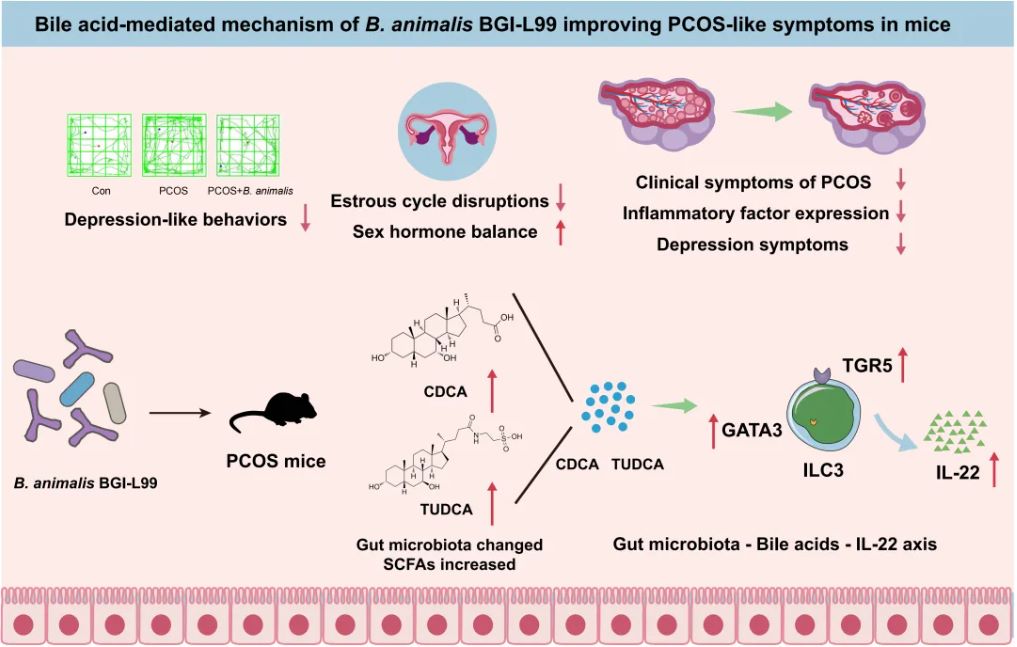
Polycystic ovary syndrome (PCOS) is a prevalent endocrine disorder tightly linked to gut microbiota dysbiosis. While probiotics present a promising therapeutic avenue, the underlying mechanisms remain largely unclear. Here, we investigated the efficacy and mechanism of Bifidobacterium animalis subsp. lactis BGI-L99 in a dehydroepiandrosterone (DHEA)-induced PCOS mouse. We found that oral administration of BGI-L99 significantly ameliorated PCOS phenotypes, including restoring estrous cycle regularity, ameliorating depression-like behaviors, reducing cystic follicles, decreasing serum testosterone, and increasing estradiol levels. Mechanistically, BGI-L99 reshaped the gut microbiota and robustly increased the concentrations of beneficial bile acids, notably chenodeoxycholic acid (CDCA) and tauroursodeoxycholic acid (TUDCA). This metabolic shift was associated with a significant upregulation of the protective cytokine interleukin-22 (IL-22) in both serum and tissues. Crucially, direct supplementation with CDCA or TUDCA could mimic the beneficial effects of probiotics, effectively restoring the estrous cycle, reducing polycystic follicles, increasing corpus luteum count, and normalizing serum T and E2 levels. These findings confirm the pivotal role of these bile acids in alleviating PCOS symptoms and elevating IL-22 levels. Our findings demonstrate that B. animalis BGI-L99 exerts its alleviative effects on PCOS by modulating the gut microbiota-bile acid-IL-22 axis, identifying this pathway as a promising target for probiotic-based interventions.